
Tag: Transactional economy
-
We need to talk about financial services…
Buying British is an uphill struggle. Is the City’s vaunted financial services industry to blame?
-
Moving the chairs on the Titanic
As Chancellor Rishi Sunak moved the chairs around on the slowly sinking deck of the UK economy on Wednesday, one thing we can say for certain is that the well-off, and particularly the super-well-off, will come out of the economic downturn very much better off than everybody else.
-
Business shouldn’t fear a reformist government, but investors might…
A story in Today’s Guardian, and particularly its headline, illustrates perfectly how the word “business” has become co-opted by the rich and powerful, so it no longer means what it ought to mean.
-
Let’s not weep for the departing oligarchs – resilience begins at home
Yesterday, billionaire hedge fund managers; today, the nameless super-rich buying into London’s property market.
-
Extreme wealth is not a “victimless crime”
Twenty-five hedge fund managers took home $13 billion in earnings last year, according to a new report. Easy enough to be appalled, outraged, disgusted – or even impressed – but what does this really mean for the rest of us?
-
Rescuing child refugees is valuable work, but the system can’t see it
Which is more valuable? The rescuing of vulnerable refugee children, or the management of a retail chain in the years prior to its collapse? By “more valuable” I mean which of these two activities brings more benefit to society?
-
Junior doctors are the standard bearers for a new economy
This government’s confrontation with junior doctors, which looked at one point like a traditional labour dispute about terms and conditions, has morphed into something much more important.
-
Productivity in crisis – armies of middlemen living on the backs of the productive few
To an otherwise comprehensive overview of the UK’s productivity crisis by Duncan Weldon in The Guardian on Monday, one key factor could be added. Paid work is not necessarily productive, and not all productive work is paid.
-
Decades of sell-offs leave Britain unable to pay its way in the world
Nearly forty years of selling off publicly-owned utilities, nationalised industries, national infrastructure and even basic government services means that Britain’s capacity to retain its own wealth is severely depleted.
-
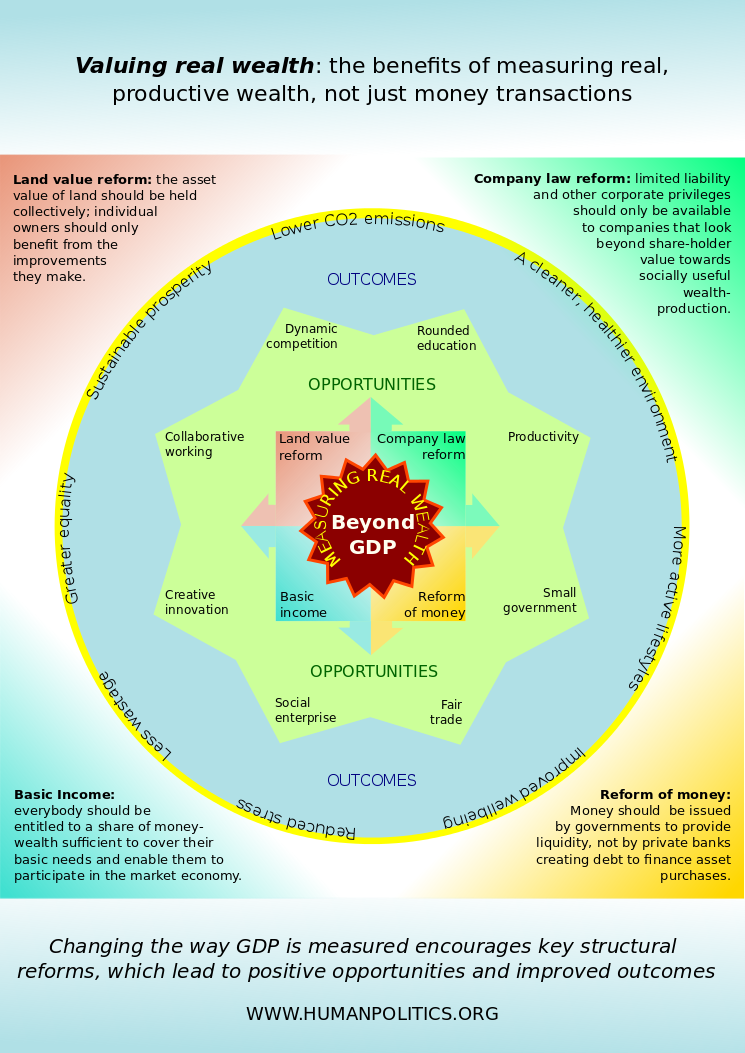
Beyond GDP – how measuring real wealth can pave the way for the basic income
Wellbeing increases through a virtuous, self-reinforcing cycle; unlike money, it is not a zero-sum game.
-
How to earn £90,000 a year making sandwiches while saving the NHS
Plans by multinational food processing company Greencore to recruit overseas for the workers to staff a new sandwich making factory in Northampton provoked more questions than answers last week, not least the Daily Mail headline “Is there no one left in Britain who can make a sandwich?”
-
Joined up government?
When is work productive and useful, and when is it just a drag on the productive and useful things that people want to do?